The Book as Art: From Golden Pages to Conceptual Creations
In an age dominated by digital screens and fleeting information, it's easy to forget that a book is more than just its words. Before mass production, before the internet, and even before the printing press, the book was a sacred object, a testament to human ingenuity, devotion, and artistic prowess. It was an experience for the senses: the scent of parchment, the texture of bound leather, and, most strikingly, the visual feast of pages shimmering with gold and vibrant pigments. For millennia, the physical book has not merely contained art; it has been art, an enduring canvas for humanity’s deepest stories and most exquisite craftsmanship.
The Golden Age of Illumination: Medieval Masterpieces
Imagine a world where knowledge was rare, and literacy a privilege. In the monasteries of medieval Europe, scribes and artists dedicated their lives to painstakingly copying and illustrating texts, primarily religious ones. This was the golden age of the illuminated manuscript, a period spanning roughly from the 6th to the 16th centuries. Each manuscript was a monumental undertaking, often requiring years, sometimes decades, to complete. Monks, working in scriptoria, would first prepare the parchment – animal skins stretched, scraped, and polished to a fine, smooth surface. Then came the meticulous work of the scribe, whose elegant script formed the foundation for the artistic embellishments.
But it was the illuminators who truly transformed these texts into visual wonders. Using an astonishing array of pigments derived from minerals, plants, and even insects – vibrant blues from lapis lazuli, rich reds from cinnabar, deep greens from malachite – they adorned pages with intricate borders, ornate initials, and elaborate miniatures. Gold leaf, applied with incredible precision, caught the light, giving these pages a celestial glow and lending the term "illuminated" its true meaning. These weren't just illustrations; they were visual commentaries, theological interpretations, and narrative expansions, deeply integrated with the text they accompanied. Iconic examples like the Book of Kells, a masterpiece of Insular art from the 9th century, or the Très Riches Heures du Duc de Berry, a stunning 15th-century book of hours, stand as eternal monuments to this period of unparalleled dedication and artistry.
Beyond the Script: Art, Symbolism, and Storytelling
The art within illuminated manuscripts served multiple purposes beyond mere decoration. It was a powerful tool for storytelling, especially in an era when many could not read. Images conveyed complex theological concepts, biblical narratives, and moral lessons with immediate impact. Symbolism was rife, with every color, animal, and floral motif carrying specific meaning, understood by the educated elite for whom these books were made. A lion might represent strength or Christ, while a dove symbolized the Holy Spirit. The lavishness of a manuscript also served as a display of wealth, power, and piety for its patron.
"An illuminated manuscript is not merely a written record; it is a tapestry of text and image, where the visual narrative often speaks as profoundly, if not more so, than the words themselves. It represents a synthesis of art, craft, and devotion that modern production methods can scarcely emulate."
— Art Historian Dr. Eleanor Vance
The process itself was an art form. From the precise ruling of lines to the delicate application of gesso for the gold leaf, every step required immense skill and patience. The binding, often made of carved wood, leather, or even studded with jewels, further elevated the book to the status of a precious artifact, carefully guarded and revered.
The Printing Press and a Paradigm Shift
The invention of the movable-type printing press by Johannes Gutenberg in the mid-15th century marked a revolutionary turning point. Suddenly, books could be produced in quantities previously unimaginable, making knowledge more accessible and affordable. While this was a triumph for literacy and the dissemination of ideas, it also signaled a decline in the painstaking, individual artistry of the illuminated manuscript. The focus shifted from the unique, handcrafted object to the standardized, reproducible text. Although early printed books often mimicked the aesthetics of manuscripts, with spaces left for hand-drawn initials and illustrations, the era of the book as primarily an artistic object crafted by individual hands began to wane.
Rebirth of the Book as Art: The Artist Book Movement
Centuries later, as industrialization and mass production became the norm, a counter-movement emerged, reigniting the passion for the book as an art object. In the late 19th and early 20th centuries, figures like William Morris and his Kelmscott Press championed the "art of the book," focusing on exquisite typography, high-quality paper, and artisanal binding. This paved the way for the "artist book" movement, which truly blossomed in the mid-20th century.
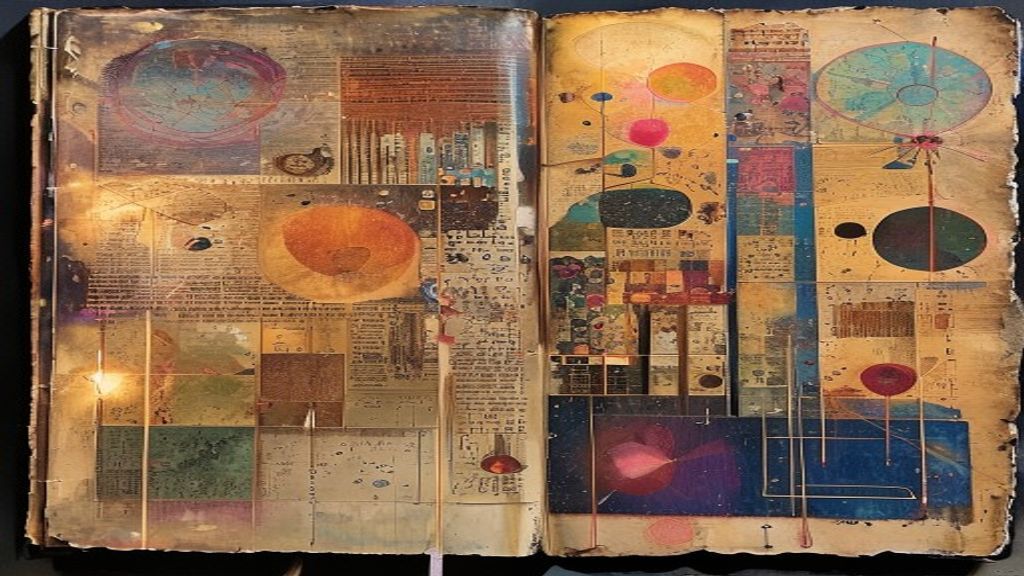
An artist book is a work of art that uses the form or concept of a book. It’s not simply a book about art; it is the art. These creations often challenge conventional notions of what a book can be, pushing boundaries of material, structure, and content. They can be sculptural, conceptual, interactive, or purely visual. Artists explore themes through the physical manipulation of the book form itself, using diverse materials from paper and fabric to metal and found objects. The narrative might be non-linear, abstract, or purely textural, inviting the viewer to engage with the object in a deeply personal and often tactile way.
Modern Masters and Materiality
Contemporary artist books are incredibly diverse, reflecting the boundless creativity of their makers. Some are miniature marvels, others colossal installations. They can be accordion-folded, unbound, or encased in sculptural containers. Artists like Anselm Kiefer have created monumental, lead-bound books that are more akin to archaeological artifacts than traditional texts, filled with dried plants and raw materials. Kara Walker's artist books often use silhouette cut-outs to explore themes of race and history, transforming the page into a theatrical stage. Richard Minsky, a pioneer in the field, creates elaborate, often provocative bindings and structures that comment on society and culture.
The beauty of the artist book lies in its ability to transcend the purely literary. It asks us to consider the object itself – its weight, its smell, its texture, its sequence, its fragility, its permanence – as part of its meaning. It's a dialogue between form and content, a celebration of materiality in a digital world, and a testament to the enduring power of human touch and imagination.
From the monasteries of the Middle Ages to the avant-garde studios of today, the book has consistently proven itself to be a dynamic and versatile medium for artistic expression. Whether shimmering with gold leaf or constructed from unconventional materials, the book as an art object continues to captivate, challenge, and inspire, reminding us that true artistry resides not just in what is said, but in how it is exquisitely presented.